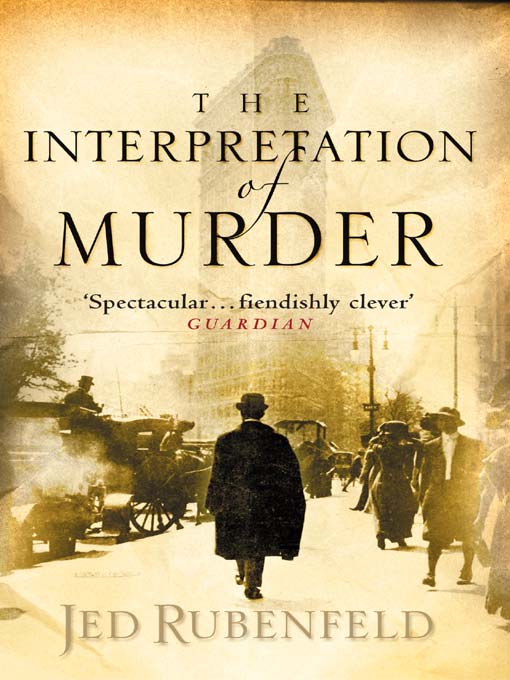
The first fiction ive read that apologises for getting its facts wrong at the end.The hatchet job on Jung still wrankles.From my small understanding Jung positions have held out better than Freuds.
This review gives a fair appraisal of the Book as a light enjoyable read
Saturday, November 14, 2015
Friday, November 13, 2015
THE WINTER OF OUR DISCONTENT by JOHN STEINBECK
This was the last of his novels , published just before he was awarded the Nobel Prize.
A tale of what he regarded as a morale decline the American Culture , though it has to be said that it was also a landmark to his own moral decline that led the man who wrote Grapes of Wrath in the late 30s to an outspoken supporter of the Vietnam War and critic of the Anti-War Artists and Writers in the mid to late 60s.
The plot is nuanced , so that much sympathy can be directed towards the main character that will do a ghastly deed against his person and soul for a trifling advantage.On page 90 we get some hometown advice about dealing with difficult situations that linger in the mind " ...cant push it out of mind...instead , remember it from start to finish whenever it comes and then youll slowly forget bits of it over time" and on page 93 we find the protagonist trying to justify to himself but realising "...no one wants advice-only corroboration."
And having sold out he tries to return to normal , having failed to satisfactorily convince himself on page 164 "...People buy from People they know.Its called goodwill and it works." , In the end the End does justify the means of this depraved morality the lead falls into on page 187 "...Success and Strength are above morality , above criticism."
The video below has a panel discussing the themes of the Book:
Monday, September 21, 2015
GOD BLESS YOU DR.KEVORKIAN by KURT VONNEGUT
This meaningful satire was written in the late 90s , an excellent primer to the lessons of the questions Vonnegut posed in the previous decades.
This review gives a synopsis of the novella.
In
God Bless You, Dr. Kevorkian, Vonnegut skips back and forth between
life and the Afterlife as if the difference between them were rather
slight. In thirty odd "interviews," Vonnegut trips down "the blue tunnel
to the pearly gates" in the guise of a roving reporter for public
radio, conducting interviews: with Salvatore Biagini, a retired
construction worker who died of a heart attack while rescuing his
schnauzer from a pit bull, with John Brown, still smoldering 140 years
after his death by hanging, with William Shakespeare, who rubs Vonnegut
the wrong way, and with socialist and labor leader Eugene Victor Debs,
one of Vonnegut's personal heroes. What began as a series of
ninety-second radio interludes for WNYC, New York City's public radio
station, evolved into this provocative collection of musings about who
and what we live for, and how much it all matters in the end. From the
original portrait by his friend Jules Feiffer that graces the cover, to a
final entry from Kilgore Trout, God Bless You, Dr. Kevorkian remains a
joy. - See more at:
http://www.buffalolib.org/vufind/Record/1042863/Reviews#sthash.jMhHH7U5.dpuf
This interview from the period just before the Iraq War gives a detailed insight on the concepts and thoughts of Vonnegut on the lessons of the past and the challenges of the present.Friday, September 18, 2015
THE IDIOT by FYODOR DOSTOYEVSKY
The appeal of this Novel is the grand concept of bringing to the outside World the Holy Russian tradition of the Holy Fool that can , if only Russia itself believes in them rather than being embroiled in wasteful Francophile dreams , can bring to the forefront the Slavic Nation and Spiritual vision that can redeem not only Russia , but the World.Nothing less than a Slavic solution for a Slavic problem.
Alas the execution , through a mixture of financial constraints at the time in Dostoyevskys life and the flaw of any concept that brings a Manifest Destiny in a Nation becoming a self-appointed Spiritual Guardian of the Races , does not , and could never , match the vision.Technically , Dostoyevsky would work on a single draft whilst his previous only copy would be getting printed by the publishers , thus giving him no working copy of the previous installment so that he could get all the threads of the story together in a coherent order.The supreme biographer of Dostoyevsky , Joseph Franks calls it right when he states the book is "perhaps the most original of Dostoevsky's great novels, and certainly the most artistically uneven of them all,".That statement very much comes across as you admire the incredible undertaking whilst also regret the forced , awkward rush of something that deserves the artist getting the space needed to proclaim such a monument to the world.
Many portions he dictated as he walked around the Room , not knowing himself the direction the work would take , and if he did decide to change tact he had no way of recalling the already printed previous draft from the publishers if he , as he done many times with other Novels , wanted to change direction with the plot or characters.
This excellent review by AS Byatt gives a very good account of the strains and stresses Dostoyevsky was under as well as the concept behind the Book and why , despite its execution , it is regarded as a masterpiece of sheer effort of an artist trying to speak The Spirit to the Masses.
"I think The Idiot to be a masterpiece - flawed, occasionally tedious or overwrought, like many masterpieces - but a fact of world literature just as important as the densely dramatic Brothers Karamazov or the brilliantly subtle and terrifying Devils . In those two novels, as in the simpler Crime and Punishment , Dostoevsky had plots and political and religious ideas working together. In The Idiot he is straining to grasp a story and a character converting themselves from Gothic to Saint's Life on the run. What makes the greatness is double -the character of the prince, and a powerful series of confrontations with death. The true subject of The Idiot is the imminence and immanence of death. The image of these things is Holbein's portrait of Christ taken down from the cross, a copy of which hangs in Rogozhin's house, and which was seen by both Dostoevsky and Prince Myshkin in Basle. It represents, we are told, a dead man who is totally flesh without life, damaged and destroyed, with no hint of a possible future resurrection. The form of the novel is shaped by the inexorable outbreak of Dostoevsky's deepest preoccupations. It is the quality of Dostoevsky's doubt and fear that is the intense religious emotion in this novel - to which Lawrence was no doubt reacting."
Thursday, September 17, 2015
NORWEGIAN WOOD by HARUKI MURAKAMI
Born at a time when Japan had undergone a humiliating aftermath after WW2 the Japanese most famous writer was a Nationalist who looked to the Imperial Age , Murakami turned his back on that and studied European literature and revelled in music thus taking a path into a World in which Memory , Dreams , Magical Realism and Reality which makes a theme that has universal appeal across all cultures and languages.
"Memory is a funny thing" could almost be a motto for what Murakamis work is all about.Norwegian Wood became and still is one of his biggest successes.
It is fitting a Book written about his student day memories should be reviewed by a student
This Guardian piece gives more depth to the theme of the Book.
" Haruki Murakami's novels have gained immense popularity because they guide readers through some of life's darkest and most dangerous territory – the cold, dark winter woods of death and grief and abuse – and do so with wisdom and warmth."The video below is a look into the social and emotional journey of Murakami and his larege following of readers.
Tuesday, September 15, 2015
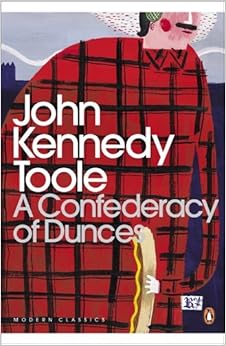
A CONFEDERACY OF DUNCES by JOHN KENNEDY OTOOLE
"When a true genius appears in the world, you may know him by this sign, that the dunces are all in confederacy against him."is a quote by Jonathan Swift which inspired by title of this posthumous tale , a debut book that has since become a popular novel in the Catch-22 type mould.
As a posthumous released work it has much merit going for it potential wise but it has a very much proto-type project feel about it.
This review by jacr100 is a very apt summation of the readers experience.
But last word should go to someone who was profoundly affected by the Book and not the cynics.
As a posthumous released work it has much merit going for it potential wise but it has a very much proto-type project feel about it.
This review by jacr100 is a very apt summation of the readers experience.
"If anyone is confused by that title, I’d better explain: I’ve been pondering why the majority of previous reviewers have either loved or hated this book. I think one reason is that you have to really engage with the character of Ignatius J. Reilly in order to expose the funny side of the novel. Admittedly his lofty sense of self-importance and heedless misanthropy won’t make this easy, not forgetting his predilection for hot dogs, burping, etc; but if you bear with him, the scorn he pours forth on virtually everyone he comes into contact with does start to make you chuckle, particularly since his anachronistic language and imaginative insults sound positively alien amidst the casual slang of his New Orleans acquaintances.The profile of the Book increased when it and the writer received a Pulitzer prize , as this reviewer in the video suggests sometimes prize giving bodies "some of these prize-giving bodies try to prove how much smarter they are than you and I".
There are some genuinely funny moments, and the storyline is structured along the lines of classical farce drama, with the unfortunate Ignatius spiralling downwards into an ever more precarious position, both socially and financially. Not that he cares, mind you – he has only entered the world of work temporarily and under coercive pressure from his mother, biding his time until his great social commentary modelled on the philosophy of Boethius propels him to prominence. I agree with one other reviewer that it is this latter project that makes the book a little turgid at times, when Ignatius casts down pages of vitriolic invective in his diary. These sections aren’t boring, but neither are they that funny, and the reader might be forgiven for skipping them to get back to Ignatius loudly criticising the latest film, or condescendingly mocking whomever he encounters that day.
Anyone who is looking for a deep social satire, portrait of New Orleans, or critical insight into the reality of the American Dream probably won’t be too enamoured with this book, since it achieves these very subtly, against a backdrop of farce and characters who in many cases are exaggerated or one-dimensional. But if you approach this book not expecting – or even wanting – to discover the psychologies or ‘truths’ of human existence, and instead begin with an open mind just large to accommodate a near-obese, pompous buffoon with aims to change the society he despises for its ignorance and avarice, you might be in for a pleasant surprise."
But last word should go to someone who was profoundly affected by the Book and not the cynics.
"'A Confederacy of Dunces' is a story of loneliness amid crowds, a comedy that hurts. At the centre is an anti-hero named Ignatius J Reilly. If Don Quixote had been thrust into the underbelly of modern New Orleans, this is exactly who he would have become. Hypochodriac, melancholic, a walking catastrophe, an unlikely philosopher in a world where few have patience for abstractions. With his clumsy ways, tweed trousers and inexcusable bluntness, he doesn't fit in, entering social contexts with his lumbering, elephantine fashion. The reader cannot decide whether to pity or admire him, but loves him all the same. As Walter Percy said, he is "in violent revolt against the entire modern age.""
Tuesday, September 8, 2015
SOUL MOUNTAIN by GAO XINGJIAN
Looking back in China , a little like in Spain under Franco or South America under the military dictators , is not merely an innocent reflection on times past , it has to be a journey in which the reality of the past has to be a shadowworld , a universe peopled by spectral beings in a ghostly world where memories merge into unreal metaphorical paintings on a canvas magic-reality masquerading as myth over experience.
It is this necessary approach even for a Chinese writer living outside his homeland ,just as Spanish and Latin American writers living outwith the past , cannot directly pass comment on the previous which makes some criticism of the Book being a fragmented jumble of memory that never crystallises into a coherent narrative a little unfair.
In saying all this the Book does not really have a "soul" of its own that captures the reader with a vision for a better alternative , more it comes across as a sad lament of a man who himself has lost touch with his inner soul.
This review by NICHOLAS D. KRISTOF for the New York Times gives a fair assessment of the Novel
"Back to the question, though, of what ''Soul Mountain'' is about: every reader might answer the question differently, but to me at least it was ultimately less a travelogue than a searching account of an individual's ramblings to himself as he bounced between the oppression of the group and the oppression of loneliness. Escape from the collective is a particularly resonant theme for Chinese intellectuals like Gao, for status and power have always been conferred on Chinese scholars by the state -- typically a repressive one.
The Cultural Revolution from 1966 to 1976 reminded intellectuals, if they needed any such reminder, that the group could turn on them suddenly and ferociously. In those years, teachers and officials would abruptly find themselves paraded in front of a mob and forced to bend down, arms twisted painfully behind their backs, as their colleagues, friends, children and even spouses stepped up to denounce them as spies, counterrevolutionaries or ''stinking'' reactionaries. Those struggle sessions subsided after 1976 but left many people with an enduring fear of political campaigns and mob rule. Perhaps it is not surprising that Gao is drawn to Taoist recluses in the mountains"
Subscribe to:
Posts (Atom)


